What to Expect From an Environmental Science Degree in 2026
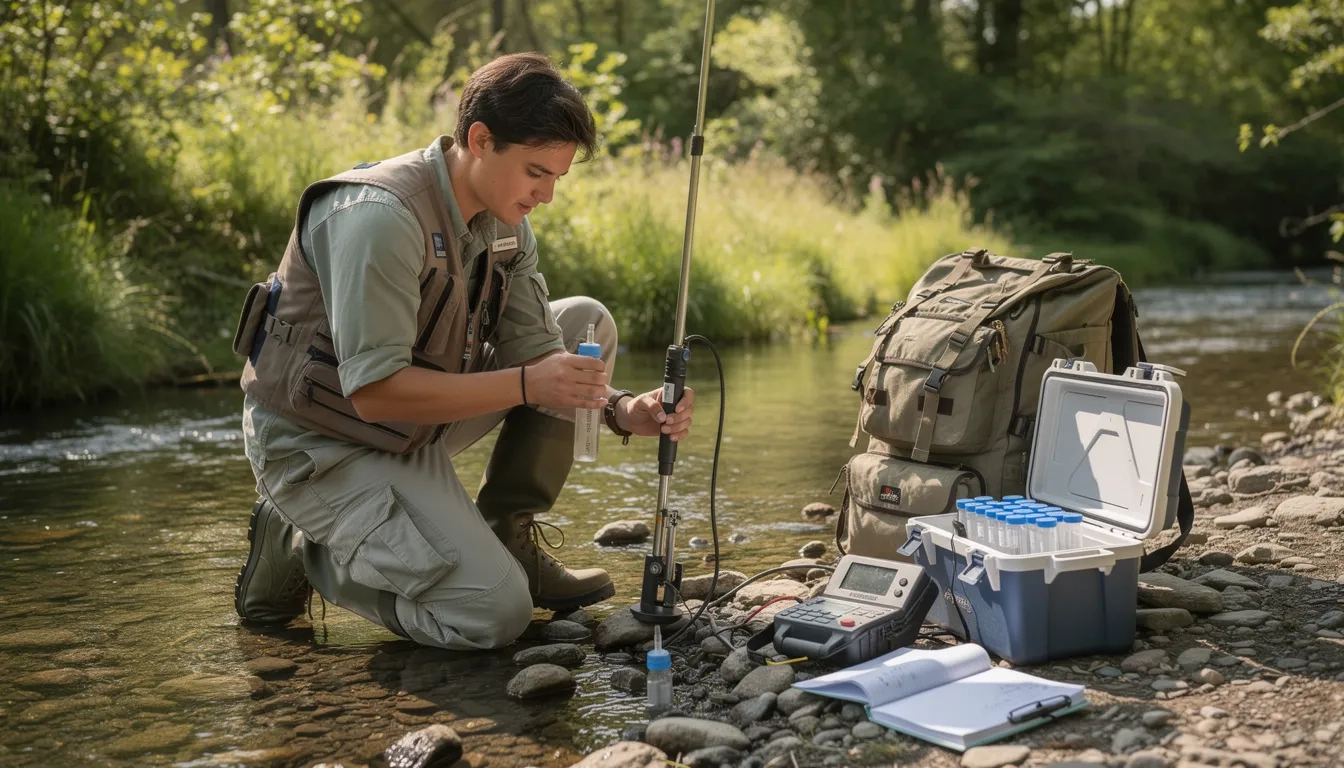
If you told someone in 2015 you were majoring in environmental science, they probably pictured you knee-deep in a stream counting salamanders. That image was never fully accurate, and in 2026 it's almost comically wrong. Today's environmental science students are running statistical models, pulling satellite imagery into GIS software, and reading environmental law alongside organic chemistry. Meanwhile, the job market they're graduating into is being reshaped by two forces pulling in opposite directions: a federal government shedding environmental jobs at a pace not seen in decades, and a private sector that can't hire sustainability talent fast enough.
That contradiction is the real story of this degree right now. Let's get into what you'll actually study, what the numbers say about where the jobs are, and why the answer to "is this degree worth it in 2026" depends almost entirely on which half of that story you pay attention to.
What You'll Actually Study
Environmental science degrees are built to be interdisciplinary, and that's not marketing language — it shows up directly in the credit requirements. Most bachelor's programs require around 120 total credit hours, and the core is a genuine hard-science load, not an elective buffet.
Looking at how real programs structure the major (UVA's environmental sciences department and UT Austin's catalog are good representative examples), you'll typically work through:
- Foundational geology, ecology, and hydrology courses — the physical building blocks of how environmental systems actually function
- At least one semester of calculus, plus a strong recommendation (often a requirement) for statistics
- Two full lab-science sequences chosen from chemistry, biology, and physics — not just intro survey courses, but courses with actual lab components
- A senior capstone or seminar that forces you to apply the coursework to a real environmental problem
- An applied/experiential component — an internship, field course, or research project, often a graduation requirement
Then there's the specialization layer. Depending on the school, you'll pick a track: environmental chemistry, conservation biology, environmental policy, water resources, or increasingly, geospatial analysis. That last one deserves its own callout, because GIS (geographic information systems) has quietly become one of the most in-demand technical skills attached to this degree — employers want people who can turn raw environmental data into maps and models, not just people who can identify a wetland by sight.
The Common Misconception That's Costing Students
Here's the misconception that trips up more students than any other: people assume environmental science is a "nature appreciation" major — soft, qualitative, mostly about caring rather than calculating. It is not. It's a hard-science degree with a policy and communication layer bolted on top, and the math/chemistry prerequisites weed out a lot of students who show up expecting something closer to an outdoor recreation program.
If you can't handle a full year of chemistry and at least one semester of calculus without flinching, you're going to have a rough time in this major — the "science" in environmental science is doing a lot of load-bearing work, and treating it as an easier alternative to biology or chemistry is the single most common reason students switch out after sophomore year.
This misunderstanding matters because it affects who enrolls, who stays, and who's prepared for the job market. Employers hiring environmental scientists aren't looking for enthusiasm about the outdoors — they're looking for people who can design a sampling protocol, run a regression, and defend their methodology to a regulator or a client's legal team.
The Job Market in 2026: A Genuine Split Screen
This is where things get interesting, and where you need real numbers instead of vibes.
The federal side has contracted sharply. The EPA has cut roughly a third of the staff it had when the current administration took office, bringing the agency down to staffing levels last seen in the Nixon and Ford era — around 9,700 employees. The agency eliminated its entire Office of Research and Development in 2025, cutting more than 3,700 positions agency-wide, with as many as 1,155 of those being chemists, biologists, toxicologists, and other scientific staff. The output impact is measurable and not subtle: EPA-produced peer-reviewed research dropped about 17% in 2025 compared with the prior year. If your career plan was "get an environmental science degree, go work directly for EPA," that path is meaningfully narrower than it was five years ago, and it's worth planning around that reality rather than hoping it reverses before you graduate.
The private and state/local side is a different picture entirely. Green hiring across industries grew faster than the supply of workers with green skills through 2025, and sustainability-adjacent hiring is now expanding fastest in sectors that have nothing to do with environmental agencies at all — financial services, tech, retail, and supply chain and logistics are all growing their sustainability-related hiring at double-digit rates year over year, according to industry hiring trend analyses. A growing share of "green" hires are landing in ordinary job titles — supply chain analyst, risk manager, product manager — that now simply expect environmental and sustainability fluency as a baseline skill rather than a specialty.
Put plainly: the government job you might have imagined is harder to get, but the corporate ESG analyst, sustainability coordinator, or environmental consultant role you might not have imagined is easier to get than it's ever been. Federal government still isn't a small employer of environmental scientists overall — state and local government combined employ over 40% of the field, per BLS data — but growth is happening in consulting and the private sector.
Career Paths and What They Actually Pay
Here's how the numbers break down by BLS's most current occupational data. Note that "environmental scientist," "environmental engineer," and "environmental science technician" are three distinct BLS categories with different education requirements and different pay ceilings — a distinction a lot of prospective students don't realize until they're already enrolled.
| Career Path | Typical Entry Education | Median Annual Pay | 10-Year Job Growth | Annual Openings |
|---|---|---|---|---|
| Environmental Science & Protection Technician | Associate's degree | $55,090 | 7% | ~5,300/year |
| Environmental Scientist / Specialist | Bachelor's degree | $82,220 | 6% | ~7,300/year |
| Environmental Engineer | Bachelor's degree (engineering) | $107,110 | 6% | ~2,300/year |
A few things worth noting about this table. First, the pay gap between "environmental scientist" and "environmental engineer" is real and it's driven by the engineering coursework, not by the environmental focus — engineers design remediation systems and treatment infrastructure, which commands an engineering-market salary. Second, the technician role is a legitimate on-ramp: it's a real career, and for students who want to start earning sooner with an associate's degree, it's a viable entry point that can lead into a bachelor's-level role later. Third, all three categories are growing faster than the average for all US occupations, which — federal cuts notwithstanding — tells you the underlying long-term demand for this work hasn't disappeared.
Skills That Actually Move the Needle Now
If you want to be competitive by 2026-2027 graduation, coursework alone isn't enough. Based on what's showing up in the hiring data, prioritize:
- GIS and remote sensing proficiency — genuinely a differentiator, not a nice-to-have
- Statistical software (R or Python) — environmental data work has become quantitative, and "I can use Excel" doesn't cut it anymore
- Environmental regulation literacy — knowing how the Clean Water Act, NEPA, or state-level equivalents actually function in practice
- Written communication — you will write reports for non-scientists constantly; this is not optional
- At least one internship or field research placement before graduation — most programs require this anyway, but treat it as a career requirement, not a box to check
Should You Go Straight to a Master's?
This is a real decision point, and the honest answer is: it depends on which door you're trying to walk through.
- If you want a research-heavy or federal-adjacent role, a master's has historically opened more doors — but weigh this against the current contraction in federal science hiring before assuming that calculus still holds.
- If you're aiming for corporate sustainability, ESG, or consulting roles, a bachelor's plus relevant internships and a GIS or data credential is often enough to get hired, especially given how fast private-sector green hiring is currently outpacing the supply of qualified candidates.
- If you're unsure, work for two to three years first. The field is shifting quickly enough right now that the master's program you'd want in 2026 might look different from the one that makes sense once you know whether you're headed toward consulting, corporate sustainability, or something more technical like environmental engineering.
Bottom Line
An environmental science degree in 2026 is a legitimate, quantitative STEM credential — not a nature-appreciation major — and it's landing in a job market that's genuinely split: federal environmental science hiring has contracted sharply under EPA staffing cuts, while private-sector sustainability and ESG hiring is growing faster than the talent supply can fill it. The degree still pays reasonably well (a median of $82,220 for environmental scientists, more for those who add engineering coursework), and demand is still projected to grow faster than the average occupation over the next decade.
- Go in expecting real math and lab science — calculus, chemistry, and statistics aren't optional add-ons, they're the spine of the degree.
- Build GIS and data skills deliberately — don't assume the required coursework alone will make you competitive.
- Don't bank your career plan on a federal agency job — target consulting, corporate sustainability, and state/local roles as your primary path, and treat a federal position as a bonus, not the baseline.
- Get at least one real internship or field placement before you graduate — employers in this field weight applied experience heavily.
- Decide on grad school based on your target sector, not on inertia — research and federal-adjacent tracks benefit more from a master's than corporate sustainability tracks currently do.
Frequently Asked Questions
Is environmental science a hard major? Yes, relative to its reputation. It requires calculus, statistics, and two full lab-science sequences (typically drawn from chemistry, biology, and physics), plus a senior capstone. It's closer in rigor to a biology or geology degree than to an environmental studies or sustainability studies program, which tend to be more policy- and humanities-focused.
What's the difference between environmental science and environmental engineering? Environmental science focuses on studying environmental systems, collecting data, and assessing impacts; environmental engineering focuses on designing the physical systems (water treatment, remediation infrastructure, pollution control) that address those problems. BLS data shows environmental engineers earning a meaningfully higher median wage ($107,110 vs. $82,220), largely reflecting the engineering coursework and licensure path.
Are EPA job cuts going to hurt my chances of finding work in this field? They hurt your chances specifically at EPA and reduce federal scientific research output, but they don't eliminate demand for environmental scientists broadly. State government, local government, and private consulting together employ far more environmental scientists than the federal government does, and private-sector sustainability hiring is currently growing quickly enough that the overall picture isn't as dire as the EPA headlines alone suggest.
Do I need a master's degree to work as an environmental scientist? No — a bachelor's degree is the standard entry-level requirement according to BLS. A master's becomes more valuable if you're targeting research-heavy roles, want to specialize narrowly (toxicology, hydrogeology), or are competing for federal-adjacent positions where advanced degrees are more common.
What jobs can I get with this degree besides "environmental scientist"? Environmental consultant, sustainability coordinator or analyst, ESG reporting analyst, environmental compliance specialist, GIS analyst, conservation scientist, environmental health specialist, and water resources analyst are all common landing spots — many of them in industries (finance, tech, retail, logistics) that don't sound "environmental" at all on the surface.
Is this degree worth it in 2026 given the federal cuts? For most students, yes, provided you don't plan your entire career around a federal agency job. The occupation is still projected to grow faster than the average across all US jobs over the next decade, private-sector sustainability hiring is expanding quickly, and the skills (data analysis, GIS, regulatory literacy) transfer well beyond any single employer or administration.
Sources
- Environmental Scientists and Specialists — BLS Occupational Outlook Handbook
- Environmental Engineers — BLS Occupational Outlook Handbook
- Environmental Science and Protection Technicians — BLS Occupational Outlook Handbook
- EPA Staffing Fact Sheet — Environmental Protection Network
- Trump administration is on track to cut 1 in 3 EPA staffers by the end of 2025 — The Conversation
- EPA producing less scientific research after 20% staffing cut, data shows — Federal News Network
- EPA Eliminates Office of Research and Development, Will Cut Over 3,700 Staff — Columbia Climate Law
- Business and Sustainability Job Trends for 2026 — IE University
- Top Sustainability Hiring Trends for 2026 — Green Careers Hub
- Undergraduate Degree Requirements — UVA Department of Environmental Sciences
- Bachelor of Science in Environmental Science — UT Austin Catalog