Washington Scholarship Directory 2026: Every Major Program, Deadline, and Dollar
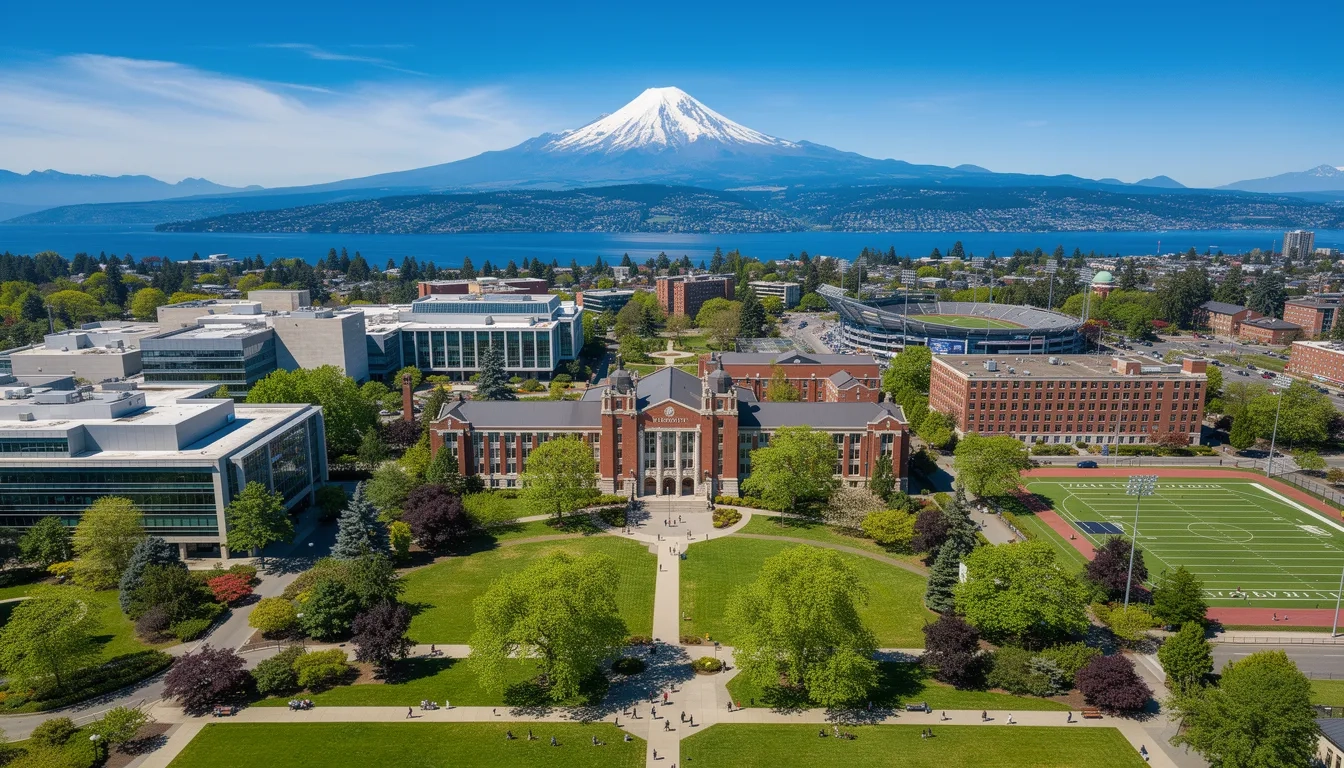
Here's a frustrating truth about scholarship hunting in Washington: the money exists. Billions of it. A family of four earning under $78,500 can send a kid to a public university for free through state programs alone. But the programs are scattered across a dozen agencies, the deadlines are wildly inconsistent, and nobody hands you a single map. This guide is that map.
The Foundation: State-Funded Aid Programs
The Washington College Grant (WA Grant) is the backbone of the state's financial aid system, and it's genuinely impressive in scope. The Washington Student Achievement Council (WSAC) administers it, and unlike many state grants, it covers not just four-year degrees but also certificates, job training, and apprenticeship programs.
Awards are tiered by family income and institution type. For 2025-26, here's what the numbers actually look like:
| Institution Type | Full Award (Column A) | Reduced Award Range |
|---|---|---|
| Public Research Universities (UW, WSU) | $12,780/year | $1,278–$12,780 |
| Public Comprehensive Universities | $8,510/year | $777–$8,510 |
| Private Four-Year (Non-profit) | $9,739/year | $562–$9,739 |
| Community & Technical Colleges | $4,923/year | $492–$4,923 |
| Apprenticeship Programs | $4,923/year | $492–$4,923 |
Income thresholds are generous. For 2025-26, a family of four can earn up to $131,000 and still receive some WA Grant funding, though the full award kicks in at $78,500 and below. A solo student with no family income qualifies for the full grant up to $41,000, with partial awards extending to $68,000.
One significant 2026-27 change: Private for-profit institutions are being removed from WA Grant eligibility entirely beginning next academic year. And private non-profit four-year schools will be capped at 50% of what research university students receive. If you're at a for-profit school, this affects your planning now.
Washington State Opportunity Scholarship (WSOS): The STEM and Trades Ladder
WSOS operates differently from the WA Grant. It's not a pure need-based program — it's designed to pull low- and middle-income students into high-demand fields, and it has teeth.
The program runs three distinct tracks:
- Baccalaureate Scholarship: Up to $22,500 over six years for eligible STEM and health care majors
- Career & Technical Scholarship: Up to $1,500 per quarter through program completion, covering certificates, apprenticeships, and associate degrees in health care, STEM, or trades
- Graduate Scholarship: Up to $25,000 over three years for Advanced Nurse Practitioner candidates (MSN/DNP) who commit to practicing in Washington's medically underserved areas for at least two years post-graduation
The graduate scholarship's two-year service requirement is the elephant in the room for some applicants. But for someone already planning to work in rural or underserved Washington, it's essentially free money with a promise you'd make anyway.
WSOS also runs an OpportunityTalks: Future Focus event on May 11, 2026 — worth attending if you're weighing whether to apply.
Early Commitment Programs: Starting Before High School Ends
College Bound is arguably Washington's most underutilized program. Low-income 7th and 8th graders sign a pledge committing to college, maintain a 2.0 GPA, avoid felony convictions, and file the FAFSA or WASFA upon graduation. In exchange, they receive funding to cover tuition, fees, and books at a Washington institution.
The catch: you have to sign the pledge in middle school. Students who miss that window can't retroactively enroll, which means counselors at Title I schools carry enormous responsibility in getting this in front of families early enough.
Passport to Careers targets former foster youth and unaccompanied homeless youth specifically, covering college, apprenticeships, and pre-apprenticeship programs. This program addresses a documented gap — foster youth age out of the system with very limited financial resources, and standard financial aid calculations weren't built with their situation in mind.
Identity-Based and Community Scholarships
Washington's scholarship ecosystem has meaningful support for students from specific communities. These aren't afterthoughts — some of these awards are substantial.
WSAC Programs for Specific Groups
- American Indian Endowed Scholarship: For students with close social and cultural ties to a Washington tribe or community. Run through WSAC, not tribal nations directly.
- Washington Award for Vocational Excellence (WAVE): Targets high school seniors and community college students excelling in career and technical education (CTE) programs — a recognition of the fact that trades and vocational paths are legitimate scholarship pathways, not consolation prizes.
Private Awards Worth Knowing
Pride Foundation Scholarship stands out in the regional landscape. It offers up to $16,000 for LGBTQ+ and ally students across five Pacific Northwest states (Alaska, Idaho, Montana, Oregon, Washington), with a January 10 deadline. That deadline is earlier than most students expect.
The WWIN Star Scholars Program offers $5,000 per academic year (up to $20,000 total) to women pursuing a first bachelor's degree in Washington, with a deadline that falls in mid-April.
For accounting students, the Washington CPA Foundation Scholarships run from $5,000 to $10,000, with a February 10 deadline — early enough that students need to be actively organized in fall semester.
The Broader Private Scholarship Landscape
Beyond state programs, Washington students have access to dozens of private awards with varying deadlines throughout the year. A sampling organized by when you need to act:
January deadlines:
- Pride Foundation Scholarship — up to $16,000 (Jan 10)
- Wanda Munn Scholarship — $2,000 for reentry/non-traditional female students in ABET-accredited programs (Jan 31)
- Northwest Star Legacy Scholarship — $1,250 for SWE members in engineering and computing (Jan 31)
February deadlines:
- Washington CPA Foundation Scholarships — $5,000–$10,000 for accounting students (Feb 10)
- Jimmy Rane Foundation Scholarship — $500–$5,000 for students demonstrating academic excellence and financial need (Feb 6)
March–April deadlines:
- Brown Family Foundation Scholarship — $5,000 for Pacific Northwest residents at Christian colleges (Mar 15)
- INCIGHT Scholarship — $500 for Washington, Oregon, California residents with disabilities (Apr 15)
- WWIN Star Scholars — $5,000 for women pursuing bachelor's degrees in Washington (Apr 18)
Later in the year:
- Washington Thoroughbred Foundation Scholarship — $5,000 for students in equine-related careers (May 1)
- Sybil H. Shearer Nursing Scholarship — $6,000 for Chelan County residents studying nursing (Jun 1)
- WSADA Bright Future Scholarship — $3,000 for automotive technology students (Jun 30)
- Leadership 1000 Scholarship — $5,000–$20,000 for Washington residents (Nov 30)
- Act Six Scholars Program — full tuition, leadership-focused, with a November 28 deadline at partner colleges
The Leadership 1000's $20,000 ceiling is worth circling. Relatively few students seem to apply relative to the award size. Same with the Act Six program — full tuition scholarships tied to leadership cohorts at specific schools are genuinely competitive but not oversubscribed the way national merit awards are.
FAFSA vs. WASFA: The Application That Controls Everything
This is where students lose money without realizing it. Most financial aid in Washington — state grants, institutional aid, work-study — flows through one of two applications:
- FAFSA (Free Application for Federal Student Aid): For U.S. citizens and eligible non-citizens
- WASFA (Washington Application for State Financial Aid): For undocumented students, DACA recipients, and others who don't qualify for federal aid
The 2026-27 WASFA application is currently open. Students enrolling in fall 2026 through spring 2027 should complete it now. Waiting costs real money because some institutional aid is first-come, first-served even when the program itself isn't technically competitive.
The single most expensive mistake Washington students make isn't picking the wrong scholarship to apply for — it's filing their FAFSA or WASFA late and watching need-based institutional funds go to students who simply applied sooner.
State Work Study is worth flagging here too. It's a separate program that provides approved on- or off-campus employment tied to your financial aid package. Students who treat it as an afterthought and take informal jobs instead leave real money on the table — because state work-study earnings are tax-advantaged compared to regular wages in some circumstances.
How to Build Your Application Strategy
The mistake most students make is treating scholarships as a lottery. A better model: think in tiers.
Tier 1 — Apply regardless (high probability if eligible): These are need-based state programs with no competitive essay. If you're income-eligible, file the FAFSA or WASFA and you're automatically considered.
- Washington College Grant
- College Bound (if you signed the pledge)
- Passport to Careers (if you were in foster care)
Tier 2 — Apply with moderate effort (field-specific or community-specific): These require an application but have defined eligibility pools that limit competition.
- Washington State Opportunity Scholarship (STEM, health care, trades)
- American Indian Endowed Scholarship
- WAVE Scholarship (CTE students)
- Pride Foundation (LGBTQ+ community)
- WWIN Star Scholars (women pursuing bachelor's degrees)
Tier 3 — Apply selectively (essays, competitive, any student can enter): Only pursue these once Tier 1 and 2 are locked in.
- Leadership 1000 Scholarship
- Act Six Scholars Program
- Jimmy Rane Foundation
- Washington CPA Foundation (if accounting)
Students who begin building their list in spring of junior year — 11th grade — can map deadlines against college application timelines, identify which institutions have the best WA Grant pairings, and actually submit complete applications rather than rushing.
One last, oddly specific piece of advice: the Washington Scholarship Coalition website lists 47 niche awards that don't appear on Scholarships.com or Bold.org. Logging in there takes 12 minutes and the average student finds at least two awards they'd never seen before.
Bottom Line
- File your FAFSA or WASFA first. Everything else in Washington financial aid builds on top of this. Do it now, not in February.
- Check WA Grant eligibility immediately. A family of four earning up to $131,000 qualifies for something. Most students don't know the income ceiling is that high.
- If you're in STEM, health care, or trades, apply to WSOS. The baccalaureate award ($22,500) and Career & Technical pathway ($1,500/quarter) are underutilized relative to available funds.
- Match your scholarship targets to your actual profile. Community-specific and field-specific awards (WWIN, Pride Foundation, WAVE, American Indian Endowed) have smaller applicant pools and better odds than generic merit scholarships.
- Start building your list in 11th grade. Scholarships with January and February deadlines can't be approached in December with any seriousness.
Frequently Asked Questions
Does the Washington College Grant cover community college students?
Yes. Community and technical college students are fully eligible for the WA Grant, with maximum awards of $4,923 per year for 2025-26. The grant also applies to apprenticeship programs, so students in trades pathways aren't excluded. Starting with AY 2026-27, apprenticeship maximum awards will be set at 50% of the community college rate.
What's the difference between FAFSA and WASFA — and which one should I file?
FAFSA is the federal form for U.S. citizens and eligible non-citizens. WASFA is Washington state's alternative for students who don't qualify for federal aid, including undocumented students and DACA recipients. File whichever one applies to your immigration status — most state and institutional aid in Washington accepts both. Filing neither is the one outcome to avoid.
Is the Washington State Opportunity Scholarship only for four-year university students?
No — this is a common misconception. WSOS has a separate Career & Technical Scholarship track specifically for students pursuing certificates, apprenticeships, or associate degrees in health care, STEM, or trades. Awards run up to $1,500 per quarter through program completion, which can add up quickly for longer programs.
Can I apply for both the Washington College Grant and private scholarships at the same time?
Yes, and you should. The WA Grant is need-based state aid; private scholarships are separate. Some private awards will reduce your institutional need-based aid (because your financial need decreases), but they won't reduce your WA Grant. Always disclose outside scholarship income to your financial aid office — not doing so can trigger repayment obligations.
What happens if I miss the College Bound pledge deadline?
If you didn't sign the College Bound pledge in 7th or 8th grade, you can't retroactively join the program. It's one of the few Washington programs with a hard early enrollment requirement. If you missed it, focus on the WA Grant and WSOS instead — you can fully fund a public university education in Washington through those two programs alone if you're income-eligible.
Are there Washington scholarships that don't require a minimum GPA?
Several. The Too Cool to Pay for School Scholarship ($1,000, quarterly deadline) explicitly requires no essay and no minimum GPA, and accepts DACA and undocumented applicants. The Niche $50,000 Monthly Scholarship and No Essay $2,500 Monthly Scholarship are rolling awards open to high school and college students with minimal eligibility requirements. These won't replace major financial aid, but they're worth five minutes of effort.