Scholarships for Children of Deceased Veterans: A Complete Guide
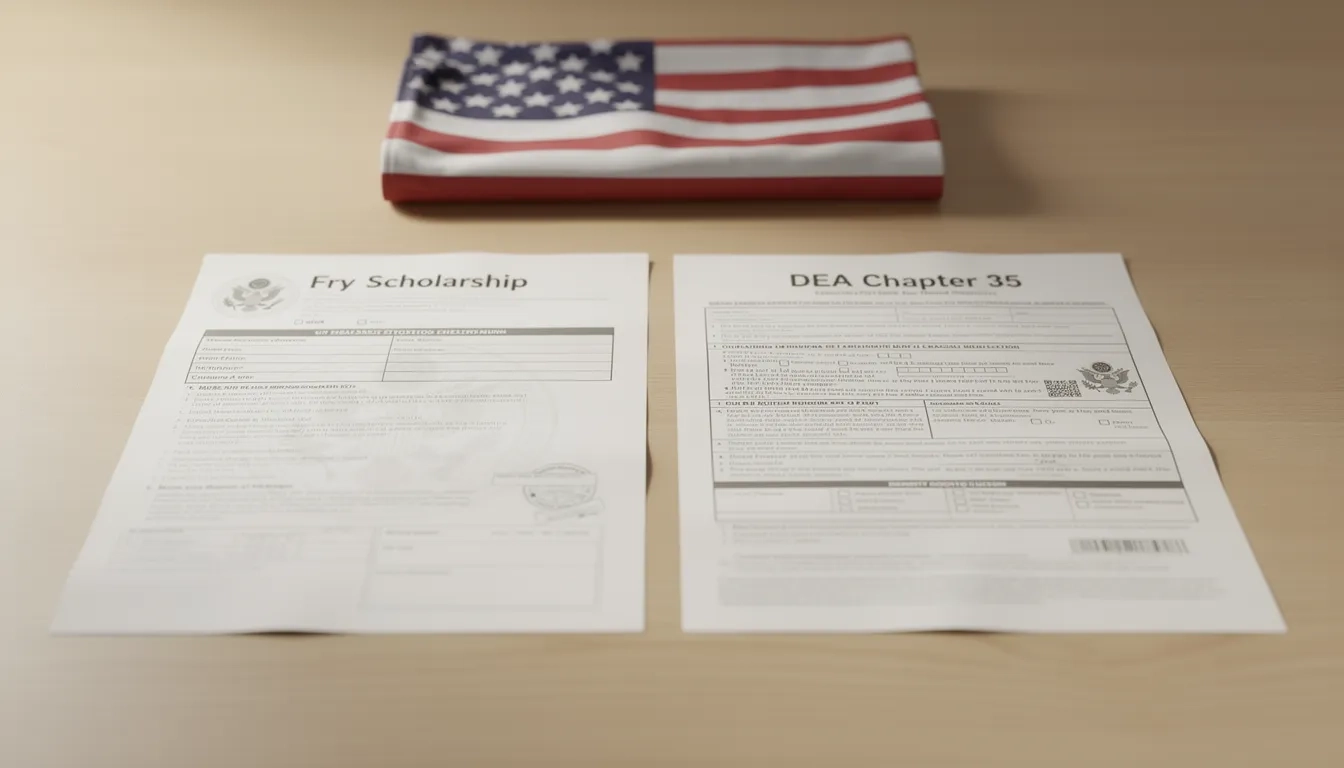
When Marine Gunnery Sergeant John David Fry was killed by an IED in Iraq in 2006, his three children were too young to understand what Congress would eventually do in his name. The scholarship bearing his name now pays full tuition at public universities for children of fallen service members. But most families don't realize the Fry Scholarship is just one of roughly a dozen funding sources available — and knowing how to layer them can mean the difference between graduating debt-free and carrying $40,000 in loans.
The Two Federal Anchors: Fry Scholarship vs. DEA Chapter 35
The Fry Scholarship and DEA Chapter 35 are the two federal education benefits designed specifically for children of deceased veterans, and they work nothing alike. Understanding both before you apply is the single most important financial decision in this process.
The Fry Scholarship covers children of service members who died on or after September 11, 2001. It pays full in-state tuition directly to the school for public university students. For private or foreign schools, the 2025–2026 cap is $29,920.95 per year. Recipients also get a monthly housing allowance tied to the Basic Allowance for Housing (BAH) rate at their school's ZIP code, plus up to $1,000 per year for books and supplies.
DEA (Chapter 35) works differently. Instead of paying tuition directly, it provides a monthly stipend: $1,574 per month for full-time enrollment at the current 2025–2026 rate. Eligibility is broader, covering children of veterans who died from any service-connected disability, not just post-9/11 deaths.
The critical tradeoff: Fry Scholarship recipients must give up their Dependency and Indemnity Compensation (DIC) payments to use the benefit. DEA recipients keep their DIC. For families receiving substantial DIC, that calculation matters a lot.
| Feature | Fry Scholarship | DEA Chapter 35 |
|---|---|---|
| Eligible deaths | On/after September 11, 2001 | Any service-connected death |
| Benefit type | Tuition paid + BAH stipend + books | Monthly stipend ($1,574 full-time) |
| Duration | Up to 36 months | Up to 36 months |
| DIC interaction | Must forfeit DIC | Can keep DIC |
| Age limit | None if parent died after Jan 1, 2013 | None if event after Aug 1, 2023 |
| Private school cap | $29,920.95/year (2025–2026) | N/A (fixed monthly amount) |
One overlooked detail: if a parent died before August 1, 2011, a child may use both programs sequentially, up to 81 combined months. For later deaths, the combined cap drops to 48 months. It's worth doing that calculation before committing to one program.
Private Foundations That Fill the Gap
Federal benefits rarely cover everything. At a school like NYU or Georgetown, the Fry Scholarship's private cap of $29,920.95 might cover less than half of tuition alone. Private scholarships pick up the slack.
The Children of Fallen Patriots Foundation is the most important non-government resource in this space. The organization works specifically to bridge the gap between VA benefits and actual education costs. Average awards run about $6,250 per year, covering tuition, fees, books, living expenses, and a one-time $1,650 computer stipend. High school juniors and seniors also receive a $500 pre-college stipend for testing and application costs. Students can use funding for up to five years, as long as they access it before age 34.
"Our goal is to ensure that no child of a fallen service member pays out of pocket or takes on loans to get a college education." — Children of Fallen Patriots Foundation
What makes Fallen Patriots different from most scholarships is the rolling application cycle. Applications are reviewed monthly, with processing taking 3–4 weeks for complete submissions. For families navigating sudden loss, that flexibility matters more than people expect.
Fisher House Foundation's Scholarships for Military Children offers a separate entry point. The program awards 500 scholarships of $2,000 each per cycle, with at least one scholarship allocated per commissary location that receives qualified applications. Children of deceased service members are explicitly eligible, provided they hold a valid Uniformed Services Identification (USID) card, are under 23, and are unmarried. The 2027–2028 cycle opens in December 2026.
AMVETS runs a scholarship program offering $4,000 awards to children and grandchildren of deceased veterans. The Special Operations Warrior Foundation goes further, providing full education grants to children of Special Operations personnel killed in action.
State Programs: The Layer Most Families Skip
Nearly every state has its own scholarship or tuition waiver for children of deceased veterans. These exist entirely apart from federal benefits and can stack on top of them. Don't leave money on the table by assuming federal programs are all there is.
- North Carolina maintains a dedicated scholarship for children of wartime veterans who died in service or from service-connected causes.
- Florida runs the CSDDV (Scholarships for Children and Spouses of Deceased or Disabled Veterans) program, covering children of veterans who died from service-connected disabilities on active duty.
- Texas offers the Hazlewood Act, which provides tuition exemptions (not just reductions) at public colleges for qualifying military dependents.
The catch is residency. Most state programs require either that the veteran parent was a state resident at death or that the student currently lives there. A student attending college in Florida whose parent was stationed in North Carolina may qualify under neither program. Checking your state's veterans affairs website directly is more reliable than third-party scholarship databases, which often run months out of date.
How to Stack These Benefits
The smartest approach is to treat federal benefits as the floor, not the ceiling. Here's a sequencing strategy that works:
- Determine which federal program fits your school. Use VA.gov's BAH calculator before committing. At schools in high cost-of-living cities, the Fry Scholarship's housing stipend can exceed $2,500 per month — far more than DEA's flat $1,574. The math often favors Fry at urban schools, DEA at rural ones.
- Apply to the Children of Fallen Patriots Foundation simultaneously. Their rolling cycle means no annual deadline to chase.
- Apply for Fisher House scholarships during the October–March window.
- Check your state's veterans affairs site for tuition waivers and state scholarships.
- Add AMVETS and branch-specific programs (like the Special Operations Warrior Foundation) as supplementary sources.
One thing many families miss entirely: the Yellow Ribbon Program. If you're using the Fry Scholarship at a private school where tuition exceeds the federal cap, Yellow Ribbon can cover the difference at participating schools. The school and VA split the gap 50/50. At schools with uncapped Yellow Ribbon agreements (there are over 900 of them), tuition is effectively covered regardless of the sticker price. This makes attending selective private universities genuinely affordable in a way it simply wasn't ten years ago.
The Application Timeline
Timing is less forgiving than most families expect.
Start before senior year of high school. The Fisher House scholarship for the 2026–2027 cycle opened in October 2025 — students who weren't watching missed it. The Children of Fallen Patriots' rolling cycle forgives late starters, but state programs often have April or May deadlines.
VA education benefits have no set application deadline, but processing takes 4–8 weeks. Students who apply in August expecting benefits by September tuition due dates often come up short. File in April or May before a fall semester.
Documents to gather early:
- DD Form 1300 (Report of Casualty) or official death certificate
- VA rating decision letters confirming service-connected death
- Birth certificate and proof of relationship to the service member
- Enrollment verification from the school's certifying official
- USID card (required for Fisher House and commissary-based programs)
Some families hesitate to pursue these benefits because the paperwork forces them to relive their loss. That hesitation is real, and it makes sense. But these programs exist because Congress and private donors decided this sacrifice deserved lasting recognition. Processing the paperwork is how families claim what was set aside specifically for them.
Three Mistakes That Cost Families Real Money
Mistake 1: Defaulting to DEA out of habit. DEA is older and better known. Many families apply for it without comparing it to the Fry Scholarship. For post-9/11 deaths at expensive schools, Fry is almost always the stronger financial choice — the DIC tradeoff is real, but the total benefit package is larger.
Mistake 2: Dismissing state programs as small money. A state tuition waiver covering 50% of in-state tuition at a flagship university is worth $7,000–$12,000 per year. Over four years, that's $28,000–$48,000. That is not small.
Mistake 3: Waiting until enrollment to start applications. Most programs require enrollment verification before paying, but the application process should begin 6–12 months before enrollment. Families who wait until the first tuition bill arrives face funding gaps in the opening semester. The system rewards early movers.
Bottom Line
- If the parent's death occurred after September 11, 2001, compare Fry vs. DEA before filing. The housing stipend calculation at your specific school changes everything.
- Apply to the Children of Fallen Patriots Foundation early. Rolling review cycles are forgiving, but documentation gathering takes time.
- State tuition waivers are the most commonly skipped funding layer. Go to your state's veterans affairs site directly.
- Gather the DD Form 1300, VA rating letters, and proof of relationship before starting any application. Having these ready cuts weeks off processing.
- Students who layer federal benefits, a foundation scholarship, and a state waiver can often cover the full cost of college without loans. That outcome is achievable. The system is complicated, but it is not hostile once you understand the sequence.
Frequently Asked Questions
Are children of veterans who died from illness (not combat) eligible?
Yes. The DEA Chapter 35 program covers children of veterans who died from any service-connected disability, including illness or injury unrelated to combat. The Fry Scholarship is more restrictive, requiring that the service member died while serving on active duty or in the Selected Reserve on or after September 11, 2001.
Can a child use both the Fry Scholarship and DEA Chapter 35?
It depends on when the parent died. For deaths before August 1, 2011, combining both programs is possible up to 81 months total. For deaths on or after August 1, 2011, the combined cap is 48 months, and DEA eligibility must come from a different qualifying event than the one that triggers Fry. The VA's regional processing offices can clarify your specific situation.
What happens to these benefits if the surviving parent remarries?
As of January 2, 2025, surviving spouses using the Fry Scholarship retain eligibility after remarriage and may have previously expired benefits restored. A child's eligibility is entirely independent of whether the surviving parent remarries — the child's benefit doesn't change.
Do VA education benefits affect FAFSA and need-based aid?
VA education benefits are excluded from federal taxable income but appear on the FAFSA as untaxed income, which can reduce need-based aid awards. This is a real consideration. Schools with robust, uncapped Yellow Ribbon agreements often compensate for this shift, making them a smarter choice for students whose VA benefits would otherwise reduce grant eligibility.
Are National Guard and Reserve children eligible?
Yes. Children of National Guard and Reserve members qualify for the Fry Scholarship if the death occurred on or after September 11, 2001, while serving under a federal call-up order. DEA covers Guard and Reserve children if the death was service-connected. Fisher House Foundation also includes Guard and Reserve dependents, provided they hold a valid USID card.
Is there an age cutoff for children using these benefits?
It depends on when the qualifying event occurred. For DEA, there is no longer an age limit for eligibility events on or after August 1, 2023. For earlier events, the previous age 26 cap applied with some exceptions. The Fry Scholarship has no age limit if the parent died on or after January 1, 2013. The Children of Fallen Patriots Foundation requires that funding be used before a student turns 34.
Sources
- Fry Scholarship | Veterans Affairs
- Survivors' and Dependents' Educational Assistance | Veterans Affairs
- Chapter 35 Rates for Survivors and Dependents | Veterans Affairs
- Scholarships + Grants | Children of Fallen Patriots Foundation
- FAQ | Children of Fallen Patriots Foundation
- Scholarships for Military Children | Fisher House Foundation
- 20+ Best College Scholarships for Military Children and Spouses | Fastweb