How to Find Rotary Club Scholarships: A Practical Guide
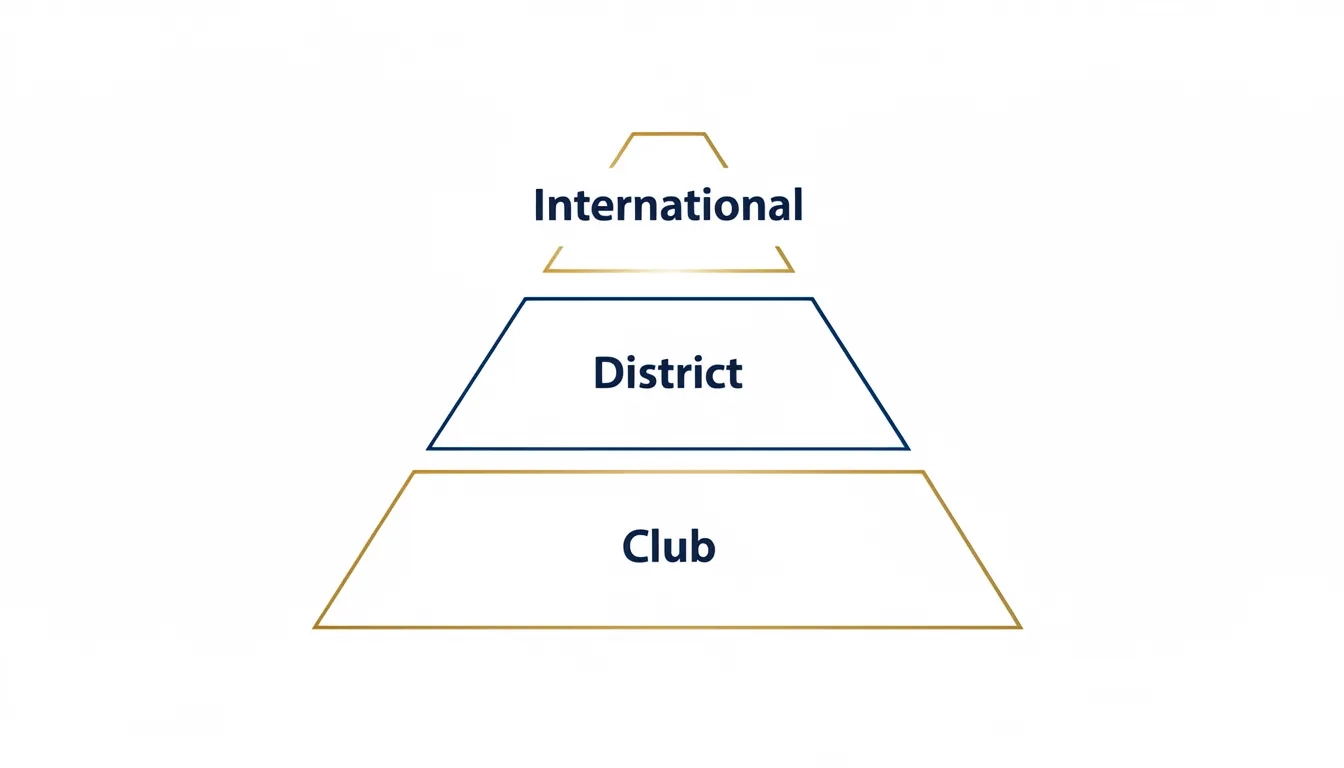
Most people searching for scholarships go to Fastweb, type in their major, and scroll through thousands of generic results. What they miss is a parallel system that distributes tens of millions of dollars annually through a global network of 35,000+ local clubs. The front door to that system isn't a web form. It's a meeting.
Rotary International's scholarship programs are genuinely underused relative to their funding. And the reason most students don't tap them comes down to one misunderstanding: they think Rotary runs one scholarship. It actually runs three, each with completely different eligibility rules, funding levels, and application paths.
Three Tiers, Three Very Different Opportunities
Knowing which tier fits your situation changes where you invest your time and energy.
| Scholarship Type | Best For | Typical Amount | Key Requirement |
|---|---|---|---|
| Club/District Scholarships | High school seniors through grad students | $500 – $20,000+ | Local club contact and endorsement |
| Global Grant Scholarships | Graduate students studying abroad | ~$30,000 base | Club sponsorship + Rotary area of focus |
| Rotary Peace Fellowships | Professionals in peace/development fields | Fully funded | 3-5 years work experience + nomination |
A college freshman applying for local money needs a completely different approach than a public health professional gunning for a Peace Fellowship. Get clear on which one you're pursuing before you do anything else.
Club and District Scholarships: Start Here First
This is where most students should begin, and almost nobody does.
Every local Rotary club can establish its own scholarship fund. The Saratoga Springs Rotary Club Foundation distributed $101,000 to 18 students in 2025, with individual awards ranging from $2,500 to $20,000. That's one club in one mid-sized city. Multiply across 35,000+ clubs worldwide and you get a sense of what goes undiscovered every year because students didn't pick up the phone.
Club scholarships commonly evaluate applicants on:
- Community service record and extracurricular involvement
- Financial need (many require FAFSA/SAR results)
- Geographic ties — living in or graduating from a specific school district
- Academic potential (not always GPA; sometimes letters of rec carry more weight)
No requirement to study a specific subject. That's the underrated part. Unlike Global Grants, club and district scholarships can fund any field of study — education, business, culinary arts, nursing, whatever.
District scholarships sit one tier up. Each Rotary district covers a geographic region and can pool funds for more competitive awards. District scholarship committees run their own review process — Rotary District 5890, for example, requires clubs to submit their selected candidate to the district chair by November 8, followed by mandatory district-level interviews in December. Your district may run on a different calendar, but the fall applications / winter interviews pattern is common.
To find your local options, use the Rotary Club Finder at my.rotary.org and identify every club within your district. Contact each one directly and ask what scholarship programs they support for the current academic year. These awards almost never surface on Scholarships.com or Fastweb — they're genuinely invisible unless you ask.
One non-obvious point: your sponsoring club doesn't have to be the closest one geographically. Any club within your district can sponsor you. If one club has a more active scholarship committee than another, go to that one.
Global Grant Scholarships: Graduate Study Abroad
Global Grant Scholarships are the flagship Rotary funding vehicle for graduate students. They cover postgraduate study abroad for one to four academic years, with a base funding level of approximately $30,000 — built from District Designated Funds combined with an 80% match from The Rotary Foundation's World Fund.
The non-negotiable: your proposed program must align with one of Rotary's seven areas of focus.
Rotary's seven areas of focus:
- Peace and conflict prevention/resolution
- Disease prevention and treatment
- Water, sanitation, and hygiene
- Maternal and child health
- Basic education and literacy
- Economic and community development
- Environment
A public health student studying tuberculosis control in Southeast Asia fits disease prevention. An engineer designing rural water filtration systems fits water and sanitation. The areas are broad enough to accommodate most graduate research in health, development, or social science — but the connection needs to be explicit, not implied. Committees see vague "my goals relate to Rotary's mission" language constantly. It doesn't work.
Eligibility requirements are specific:
- Graduate-level enrollment, minimum one academic year
- Study must take place in a foreign country
- Demonstrated academic achievement and leadership
- Language proficiency in the region of study
- Cannot be a current Rotarian or immediate family member of one
- If total scholarship costs fall under $30,000, scholars must complete a service project in their host community
Global grant applications are submitted through My Rotary online. The sponsoring club initiates the application; the scholar candidate completes their profile after the club portion is submitted.
Less obvious: you need two sponsoring clubs. A home club in your current district, and a host club in the country where you'll study. Your home club typically helps make that introduction. If they've sponsored scholars before, they often already have contacts abroad.
Timing matters more than most candidates realize. Applications are accepted on a rolling basis, but The Rotary Foundation requires at least three months for review before your intended departure. For a September start, that means a June Foundation submission — which means wrapping up district committee work by spring.
Rotary Peace Fellowships: The Fully Funded Track
The Peace Fellowship sits in a different category entirely. This one is worth knowing about even if it's years away.
Up to 170 fully funded fellowships are awarded each year — up to 50 for master's degrees and up to 120 for professional certificates. Fully funded means tuition, room and board, round-trip airfare, and all internship and field-study expenses. No loans, no gaps.
The program runs through eight Rotary Peace Centers at partner universities across North America, Europe, Asia, the Pacific, and the Middle East. Master's programs run 15 to 24 months and include a two- to three-month self-designed field study. The certificate track runs one year in a blended learning format, built for working professionals who can't step away full-time.
Who qualifies:
- Master's track: bachelor's degree, at least 3 years of work experience related to peace or development, English proficiency, demonstrated leadership
- Certificate track: 5 or more years of relevant professional experience, and a clear account of how your goals connect to Rotary's peace mission
The 2027-28 fellowship application window closes May 15, 2026. That deadline is global, set by Rotary International — missing it means waiting a full year.
Here's something the application materials understate: clubs and districts that nominate Peace Fellowship candidates want people who genuinely plan to stay connected to Rotary after the fellowship. Committees can tell when a candidate discovered the program two months ago versus someone who's attended club meetings and understands what Rotary actually does. That difference shows up in endorsement decisions.
Getting Sponsored: The Step Nobody Explains Clearly
You cannot apply for any Rotary scholarship without a sponsoring club. This isn't a background step. It is the entire mechanism.
Rotary clubs are service organizations run by volunteers. Sponsoring a scholarship candidate means real administrative work — filling out endorsement forms, submitting applications, attending committee reviews. Club members take that on for people they believe in. Not for a cold email.
A sequence that actually works:
- Identify 3-5 clubs in your district using the Rotary Club Finder at my.rotary.org
- Attend a meeting — most clubs welcome guests and prospective members
- Connect with the club president or whoever chairs the scholarship committee
- Learn what the club cares about: their service projects, their causes, their community focus
- When you have a real relationship, express interest and ask about scholarship programs
The relationship has to come before the ask. Some candidates describe it as "earning the endorsement," which sounds old-fashioned until you realize it's just how trust works. Clubs that sponsor strong candidates don't do it on the basis of a resume. They do it because they've met you.
Timeline: Work Backward From Your Start Date
Most U.S. districts follow a recognizable pattern, though yours may vary. Use this as a planning baseline:
| Milestone | Typical Timing |
|---|---|
| Start building club relationships | 12-18 months before intended study |
| Club endorsement confirmed | 10-12 months before start |
| District committee application | September-December |
| District finalist interviews | December-January |
| Foundation submission (Global Grants) | At least 3 months before departure |
| Peace Fellowship application deadline | May 15 of the year prior to fellowship |
Students who start six months before the district deadline frequently discover they've already missed the club endorsement window. The timeline isn't brutal — it just requires being organized rather than reactive.
The Peace Fellowship calendar is fixed globally (May 15), but the Global Grant and club scholarship timelines vary district to district. Contacting your district's scholarship chair early is the only reliable way to get the actual dates.
Bottom Line
Rotary scholarships run on relationships and local networks. Knowing that changes how you approach the search.
- Start with the Rotary Club Finder at my.rotary.org and contact every club in your district. Local awards are real, meaningful, and almost never listed on scholarship databases.
- Begin 12-18 months early. The club relationship has to precede the endorsement request — you can't compress that.
- Match your goals explicitly to an area of focus. For Global Grants and Peace Fellowships, the connection needs to be concrete, not implied.
- Don't overlook local club scholarships. A club giving $5,000 to three applicants is a better use of your time than a national fellowship with 40,000 competitors.
- The Peace Fellowship is the highest-value option for professionals in peace and development work — fully funded, globally recognized, 170 slots annually. If you have the experience, it deserves serious attention.
Frequently Asked Questions
Do I need to be a Rotary member to apply for a scholarship?
No. Rotary membership is not required for any scholarship program. In fact, current Rotarians and immediate family members of Rotarians are typically ineligible for Global Grant Scholarships. You do need a sponsoring club, which means building a genuine relationship with a local club — but that's different from paying dues or joining formally.
What's the difference between a Global Grant and a District Grant scholarship?
Global Grants fund graduate study abroad and require alignment with Rotary's seven areas of focus. They draw from District Designated Funds plus an 80% World Fund match administered by The Rotary Foundation. District Grants are funded locally, can cover any field of study, and are available for secondary through graduate-level students, domestically or internationally. District grants are generally smaller and considerably more flexible in scope.
Myth vs. reality: Is the Peace Fellowship only for academics and policy researchers?
No — and this may be the most widespread misconception about the program. Peace Fellows have included journalists, doctors, military officers, lawyers, community organizers, and educators. The certificate program was designed specifically for working practitioners who want to deepen their expertise without leaving their careers. What matters is demonstrated experience and a clear connection to peace-building or conflict prevention, not an academic title.
How do I find local Rotary club scholarships that aren't listed online?
Direct contact is the only reliable method. Use the club finder at my.rotary.org, locate clubs in your area, and reach out individually. Ask specifically about scholarship programs for the upcoming academic year. These awards are rarely submitted to national databases like Fastweb or College Board — they're local by design, which is exactly why they go unclaimed.
Can I apply for more than one type of Rotary scholarship at the same time?
Yes. A student pursuing a local club scholarship while also building their profile for a future Global Grant application is a smart long-term strategy. The club relationship you develop for one purpose supports the other. Just be transparent with your sponsoring club about your goals — clubs that understand what you're working toward over time are better positioned to advocate for you.