Georgia Scholarship Directory 2026: Every Program Worth Knowing
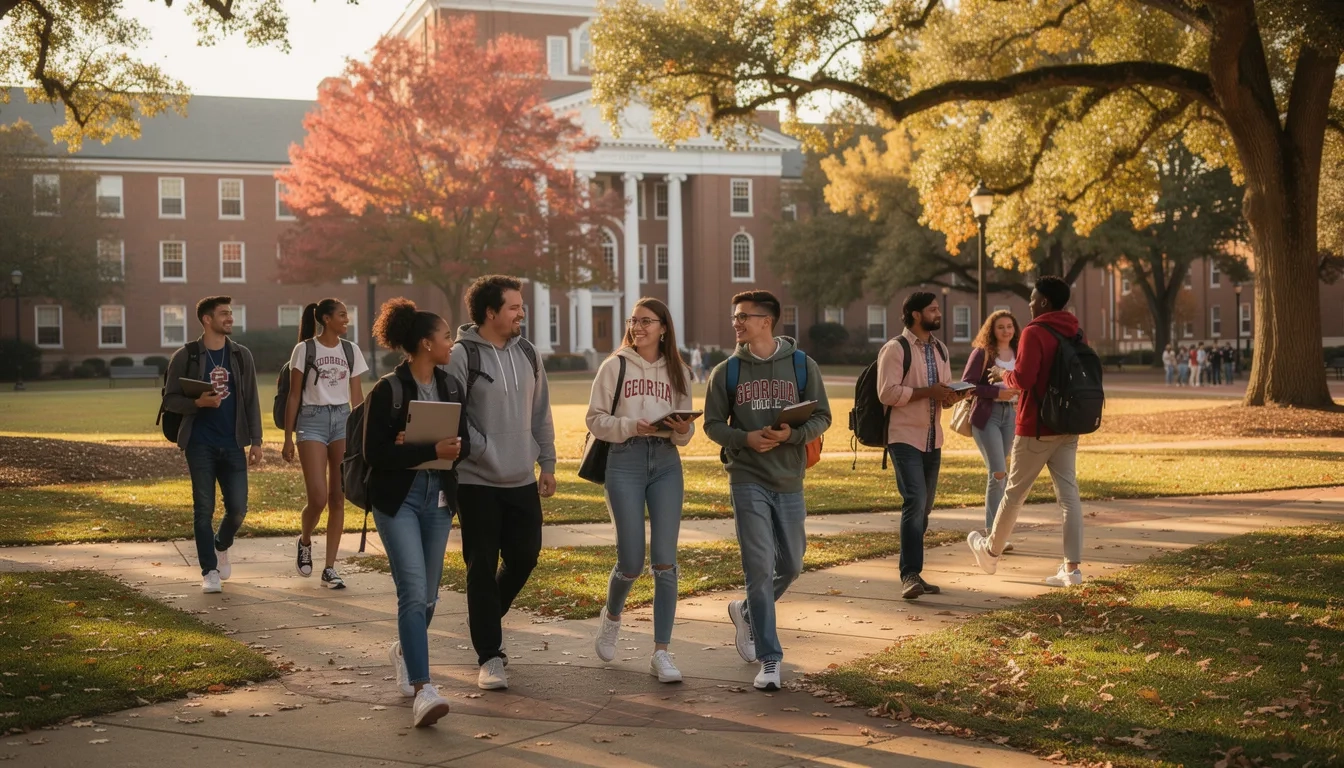
The scholarship picture in Georgia shifted in 2026. For over 30 years, the state ran on one engine: HOPE. Strong grades, funded tuition. But HOPE was never designed to cover everything — and for students who couldn't afford what it left unpaid, Georgia had no backup program. That's no longer true. A new need-based scholarship just launched, the state budget crossed $1.56 billion for financial aid, and 18 state programs are available right now that most students never find. Here's the full picture.
The HOPE Scholarship: What It Covers (and What It Doesn't)
The HOPE Scholarship has been Georgia's education anchor since 1993. A 3.00 high school GPA earns entry. Maintain that same 3.00 cumulative GPA in college, and the state keeps contributing toward tuition for up to 127 attempted credit hours. Funding comes from Georgia Lottery proceeds, and the program has become a national reference point for state merit aid.
What most HOPE recipients don't fully absorb until the first bill lands: HOPE covers a portion of tuition. Not fees. Not housing or textbooks. At most Georgia public institutions, the gap between HOPE's payout and the actual semester cost runs several thousand dollars. This is likely why Georgia students carry the second-highest student loan debt per borrower in the country — despite one of the country's most recognizable merit scholarship programs.
The checkpoint rules can also surprise students mid-degree. GSFC recalculates your HOPE GPA at every 30-credit-hour mark. Drop below 3.00 at any checkpoint and you lose the award. Regaining it at the next checkpoint is possible but not guaranteed, and a rough first year can set off a financial chain reaction that takes semesters to correct.
Zell Miller: When Full Tuition Is Actually on the Table
The Zell Miller Scholarship sits above HOPE and does what HOPE doesn't: it covers 100% of in-state tuition. At Georgia Tech for the 2025-2026 academic year, that translated to $10,512 for two full semesters at 15 credit hours per term. That figure comes directly from Georgia Tech's financial aid office — it's exact, not an approximation.
Getting there requires a 3.70 high school GPA as calculated by GSFC (their formula can diverge from your transcript) combined with either a 1200 SAT on the math and reading sections or a 25 composite ACT from a single national test administration. Both thresholds must be met. A student with a 3.85 GPA and a 24 ACT qualifies for HOPE, not Zell Miller.
Maintaining Zell Miller requires a 3.30 cumulative college GPA. That feels manageable — until you factor in 15-hour first-semester loads at competitive Georgia institutions with college-level grading curves. Students entering on Zell Miller should treat first-semester course selection as a financial decision, not just an academic one.
| Award | HS GPA | Test Score | College GPA to Keep | Covers |
|---|---|---|---|---|
| HOPE Scholarship | 3.00 minimum | None required | 3.00 cumulative | Partial tuition |
| Zell Miller Scholarship | 3.70 minimum | 1200 SAT or 25 ACT | 3.30 cumulative | 100% in-state tuition |
The DREAMS Scholarship: Georgia's First Need-Based Award
Some context matters here. Before fall 2026, Georgia was one of only two states in the country with no state-level need-based college financial aid program. The other was New Hampshire. For a state spending over $1 billion annually on HOPE, that gap has long been the elephant in the room — and advocates have been pointing to it for years.
DREAMS changes that for fall 2026. The Georgia Legislature allocated $325 million: $25 million goes directly to students beginning in fall 2026, while $300 million seeds a long-term endowment. Governor Brian Kemp stepped in when the House tried to cut the package to $100 million, using his budget authority to restore the full amount. This program has political staying power, not pilot-program status.
Awards cap at $3,000 per academic year for up to eight semesters. No minimum GPA required. Eligibility runs through the FAFSA — no separate application — and students need at least 6 credit hours at a University System of Georgia or Technical College System institution.
According to Inside Higher Ed's March 2026 reporting, Pell Grant recipients at Georgia public colleges face over $11,000 in annual unmet financial need after federal aid is applied. DREAMS closes roughly 27% of that gap. Not a complete fix, but a real intervention for a population that previously had no state-level fallback.
One current constraint: private college students don't qualify. This was a deliberate legislative compromise, not an oversight. Advocates from the Georgia Budget and Policy Institute are pushing to expand eligibility, but for fall 2026, the program is public-institution only.
State Programs Most Students Skip
The Georgia Student Finance Commission manages 18 programs in total. Most students interact with two or three. Here's what tends to go unclaimed.
REACH Georgia is the most underrated program on this list. It's a mentorship-based scholarship targeting low-income students starting in 8th grade, pairing them with community mentors through high school. The 2026 state budget newly allocated $6 million — a real expansion. Requirements are a 2.50 HOPE GPA in high school and 2.00 in college. If you enrolled in REACH in middle school and stayed engaged, your award funding exists; just confirm your status through your school counselor.
Programs with specific eligibility worth checking:
- HERO Scholarship — For deployed National Guard members, military reservists, and their immediate families. Covers tuition during qualifying enrollment terms.
- Tuition Equalization Grant (TEG) — $24 million distributed annually to full-time undergraduates at eligible private Georgia colleges. Often missed because students assume state aid only applies to public schools.
- Georgia College Completion Grant (GCCG) — For students hitting financial gaps mid-degree. The statewide pool is $10 million, so contact your financial aid office early if you might qualify.
- Public Service Memorial Grant — Direct tuition assistance for children and spouses of Georgia public safety officers killed or permanently disabled in the line of duty. No competition required — it's an entitlement if eligibility is met.
- Dual Enrollment — Not a scholarship in name, but functionally equivalent for high schoolers. Georgia students in 10th through 12th grade can earn up to 30 semester hours of free college credit before graduation, reducing the tuition burden before college even starts.
Private Scholarships That Fill the Remaining Gap
State programs handle the tuition structure. Private and foundation scholarships fill the cost-of-living side that no state program touches. A few Georgia-connected programs deserve more attention than standard search results give them.
The Watson-Brown Foundation awards $2,500 annually to Georgia and South Carolina residents at four-year institutions, weighting financial need and community engagement. The February 8 deadline comes fast every year. Students who treat this one as a "bookmark for later" usually miss it.
The Greenhouse Scholars Program offers $5,000 per year for four consecutive years, with a hard family income ceiling of $70,000 and a 3.5 GPA requirement. If you meet both, the application-to-award ratio here is better than most national scholarships.
Geography-specific scholarships are structurally undervalued. The Southwest Georgia Farm Credit scholarship awards $1,500 to agriculture students from qualifying southwest Georgia counties — a pool of dozens of applicants, not thousands. A well-targeted application to a narrow award often produces better returns than a long shot at a large national prize.
My view: most Georgia students underinvest in private scholarship searches because HOPE feels like the answer. It's not. HOPE is the foundation. Private scholarships, DREAMS, and institutional awards build on top of it.
Building Your 2026 Georgia Scholarship Strategy
Start with FAFSA. That single step unlocks DREAMS, Pell Grants, federal subsidized loans, and most institutional need-based awards. The 2026-27 FAFSA is open now. File before your institution's priority deadline — institutions set their own, and it's usually months before the federal deadline.
A practical sequence for fall 2026 applicants:
- Verify your HOPE or Zell Miller eligibility on GAfutures.org — GSFC's GPA calculation often differs from your school transcript, and the difference matters.
- File the 2026-27 FAFSA and note your Expected Family Contribution.
- Contact your financial aid office directly about DREAMS availability — fall 2026 is the program's first semester, and offices are still building their processing workflows.
- Research your specific institution's departmental and merit scholarships, which stack with HOPE/Zell Miller.
- Apply to 3-5 private scholarships where your eligibility is a close match by geography, field of study, or background.
The DREAMS rollout is a genuine unknown. There are $25 million in first-year funds and demand that will likely be high. Students with complete FAFSA files and confirmed enrollment get processed first. That's not a reason to panic — but deliberate, early action in spring will matter more than it has in past years.
Georgia students in 2026 have more scholarship money in play than at any point in state history. The catch is that most of it requires knowing it exists.
Bottom Line
- File FAFSA now. DREAMS, Pell Grants, and most institutional need-based aid all run through it. Skipping FAFSA means leaving DREAMS on the table before the year even starts.
- Know your exact HOPE tier. Confirm your GPA with GSFC via GAfutures.org before accepting any aid package — the numbers can differ from your school records and the difference can mean thousands per year.
- HOPE alone is not a financial plan. Georgia's student debt statistics make this clear. Stack DREAMS, institutional awards, and private scholarships on top.
- Look at all 18 GSFC programs. REACH, TEG, HERO, GCCG, Dual Enrollment — at least one is likely to apply to your specific situation.
- The students who graduate with the least debt will be the ones who treated scholarship searching as a structured task starting in 11th grade, not a single afternoon in senior year.
Frequently Asked Questions
Can I receive HOPE and the DREAMS scholarship at the same time?
Yes. DREAMS is need-based and HOPE is merit-based — they're designed to layer. DREAMS specifically calculates unmet financial need after all other aid, including HOPE, has been applied. A HOPE recipient with remaining financial need can receive DREAMS funding on top of it.
What happens if I lose HOPE eligibility below 3.00 GPA?
You lose HOPE at that 30-credit-hour checkpoint but can regain it at the next checkpoint if your cumulative GPA returns to 3.00. There's no cap on how many times you can lose and regain HOPE, but the math gets harder — each failed checkpoint adds another 30 hours of grades to overcome, and recovery requires a sustained streak of strong semesters.
Does HOPE apply to students at private Georgia colleges?
Yes. HOPE and Zell Miller both apply at eligible private Georgia institutions, though award amounts may differ from public school rates. The Tuition Equalization Grant adds state support specifically for private college students. DREAMS, however, is currently limited to public institutions for fall 2026.
Is DREAMS a myth until I see it in my financial aid letter, or is it confirmed for fall 2026?
It's confirmed. The $325 million allocation passed the Georgia Legislature and Governor Kemp signed off. The $25 million earmarked for fall 2026 disbursements is real. What isn't fully known yet is how individual institutions will process and communicate it — which is why contacting your financial aid office directly is the right move, not waiting for a notification.
Is the Zell Miller Scholarship something I apply for separately?
No. Zell Miller is automatically awarded if you meet the eligibility criteria and enroll at a qualifying Georgia institution. GSFC verifies your high school GPA and test scores and applies the award. You should confirm your status through GAfutures.org rather than assuming everything was calculated correctly — discrepancies happen.
Is it a myth that HOPE covers the full cost of a Georgia public college education?
Yes, that's a common and costly misconception. HOPE covers a portion of tuition — not full tuition, and not fees, housing, or books. Total annual cost of attendance at a University System of Georgia institution can exceed $25,000 once room, board, and fees are counted. HOPE might cover $4,000 to $8,000 of that, depending on enrollment level and institution. The gap is real, it's large, and it's the reason Georgia student loan debt ranks second-highest in the country.
Sources
- HOPE Scholarship | Georgia Student Finance Commission
- Zell Miller Scholarship | Georgia Student Finance Commission
- Georgia to Introduce Need-Based Financial Aid | Inside Higher Ed
- Georgia Need-Based DREAMS Scholarship Heads to Governor's Desk | WABE
- Overview: 2026 Fiscal Year Budget for the Georgia Student Finance Commission | GBPI
- State Scholarships, Grants and Loans | Georgia Student Finance Commission
- Georgia Scholarships 2026 | Access Scholarships