Essay Contests Open Year-Round: Where to Submit Any Month
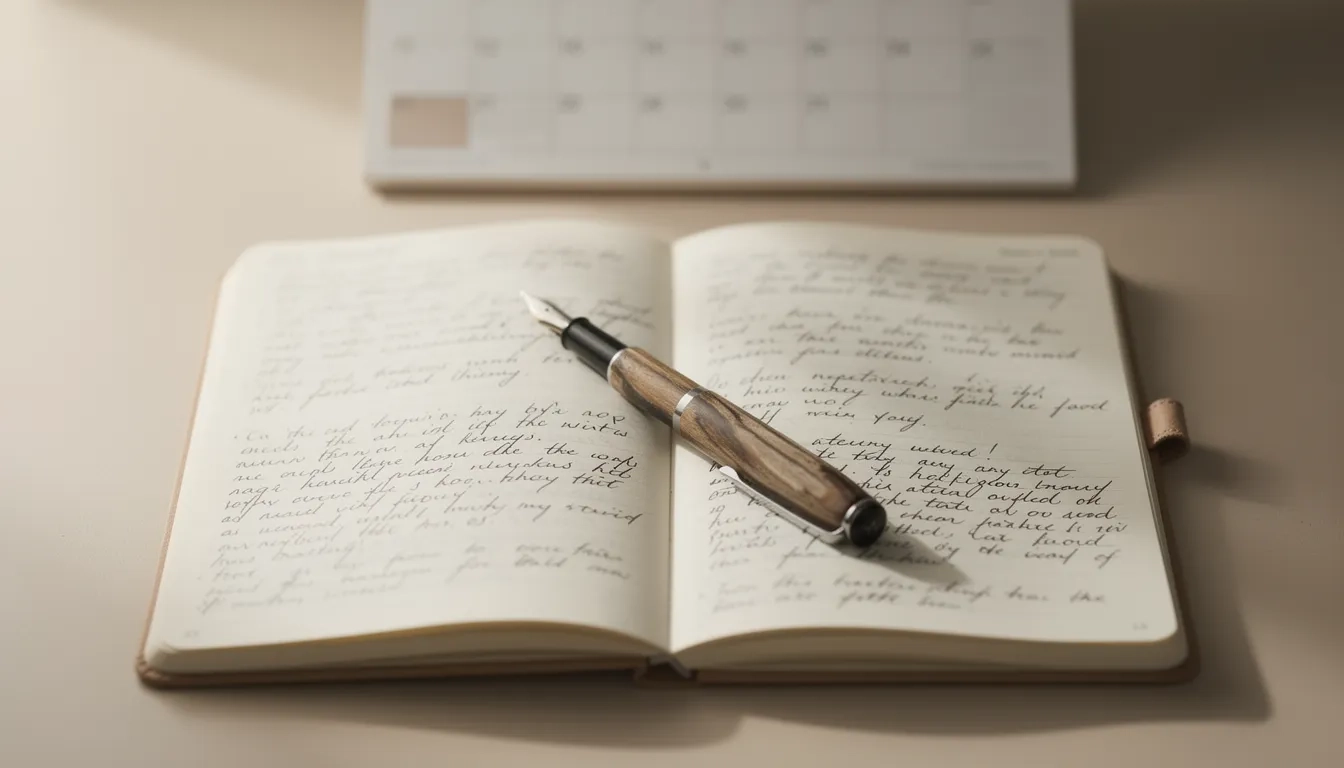
Most writers discover their favorite essay contest about three weeks after the deadline closes. You stumble across something well-funded and prestigious in March. The window closed in January. You bookmark it, forget it by July, and the cycle repeats.
The fix isn't better bookmarking. It's knowing which contests run on quarterly, monthly, or rolling schedules — and building a submission calendar that keeps you active all year, not just scrambling in a December sprint.
Rolling vs. Recurring: Two Very Different "Year-Round" Contests
Not all year-round contests are built the same, and conflating the two types leads to missed shots.
Rolling admission contests accept submissions continuously and announce results on a set cycle — monthly or quarterly. There's no single hard close date. WOW! Women on Writing, for instance, runs four separate judging pools each year. Submit in February for the Q1 window, get results in April, revise, enter Q3 in May. If your essay loses a round, you haven't lost the year. You've lost one round.
Recurring long-window contests open at the same predictable date each year and run for several months before closing. They're not open 365 days, but their windows stretch long enough that any writer who tracks them will never miss them. The John Locke Institute Global Essay Prize, for example, opens submissions on April 1 and accepts entries through May 31, with a 7-day and a 21-day extension deadline that push the final cutoff to late June. That's nearly three months of access. "I didn't know it was open" stops being a timing problem and becomes an organizational one.
Both types belong in your toolkit. Rolling contests give you volume and iteration. Long-window annual contests tend to carry more prestige and bigger prizes.
The Best Quarterly and Rolling Essay Contests
WOW! Women on Writing runs the most well-structured quarterly essay contest available to adult writers. Each season accepts personal essays between 200 and 1,000 words. Entry costs $12, or $25 with an editorial critique of your submission (which, frankly, is often the better value). First prize is $500, second place $300, third $200 — plus publication and a full author interview. Open to international writers, any background.
The quarterly format has a concrete strategic advantage: four distinct judging pools per year means four separate chances at first place without writing four entirely different essays. A writer who submits in Q1, studies the winning entry posted publicly after results, and revises their approach for Q3 is working smarter than someone who enters a single annual contest and waits eight months for a verdict.
Tadpole Press's 100-Word Contest runs multiple cycles per year with a $1,000 first-place prize (plus cash awards through 30th place) and a $15 entry fee. Writing a complete, compelling essay in exactly 100 words is harder than it sounds. The constraint forces revision discipline that longer formats let you avoid — and writers who master the form typically find their longer essays tighten up noticeably within a few months.
Monthly Platforms That Keep Teen Writers Sharp
For writers between 13 and 18, Write the World is probably the most underused year-round resource in the student essay space. New themed contests open monthly, covering personal essay, op-ed, memoir, and creative nonfiction. Entry is free. Winners get detailed editorial feedback and publication. The monthly cadence transforms contest participation from an annual anxiety event into a regular craft practice.
One Teen Story runs on a similar monthly model for ages 13 to 19. The platform selects outstanding short-form work for publication in its literary magazine each month. The prize is publication rather than cash — and for writers building a clips list before college applications, that's leaving money on the table if you ignore it.
Both platforms share something annual contests rarely offer: a visible feedback culture. Monthly results are posted publicly, and winning entries are available to read. Studying what actually gets selected — not just what you think should win — is a free masterclass that most entrants skip entirely.
High-Stakes Annual Contests with Long Windows
Some of the biggest prizes in essay writing come from annual competitions with submission windows that stretch three to six months.
The Ayn Rand Institute runs three separate essay contests each year: Anthem (middle and high school), The Fountainhead (high school), and Atlas Shrugged (high school, college, and graduate students worldwide). All three are free to enter. The Atlas Shrugged competition awards up to $25,000 for first place, with dozens of cash prizes at lower tiers. Since 1986, more than 475,000 students have entered across all three contests. Submission windows open in spring and close mid-November, covering most of the academic year — and because each contest focuses on a different novel, a writer with strong analytical range can enter all three in the same year.
The John Locke Institute Global Essay Prize opens April 1 with questions spanning philosophy, politics, economics, history, and psychology. It closes May 31, then offers two extension deadlines (7-day and 21-day) that push the final cutoff to late June. Open to students under 19. The format rewards original argument over summary — judges are looking for a position that complicates or challenges the obvious read of the question, not a recap of conventional wisdom.
The John F. Kennedy Profile in Courage Essay Contest awards $10,000 to the winner and cash prizes for 16 runners-up. Deadline falls in January, making it a natural Q4 target for writers building a full-year schedule.
A Practical Year-Round Contest Calendar
Here's what this looks like mapped out. The writers who place consistently aren't submitting to more contests — they're submitting to the right ones at the right time, and they've planned it in advance.
| Contest | Type | Prize | Entry Fee | Open To |
|---|---|---|---|---|
| WOW! Creative Nonfiction | Quarterly | $500 first place | $12 | Adults worldwide |
| Tadpole Press 100-Word | Multiple cycles/year | $1,000 first place | $15 | All ages |
| Write the World | Monthly | Publication + feedback | Free | Ages 13–18 |
| One Teen Story | Monthly | Publication | Free | Ages 13–19 |
| Ayn Rand (Atlas Shrugged) | Annual (May–Nov window) | Up to $25,000 | Free | HS/college/grad students |
| John Locke Institute | Annual (Apr–Jun window) | Not disclosed | Free | Under 19 |
| Tom Howard/Reid Essay Contest | Annual | $3,500 | $25 | All ages worldwide |
| JFK Profile in Courage | Annual (Jan deadline) | $10,000 | Free | US students |
A rough month-by-month structure:
- January: Draft for the JFK Profile in Courage (January 12 deadline); register for John Locke Institute
- February–March: WOW! Q1 window; prep Ayn Rand Anthem or Fountainhead essays
- April–May: John Locke submission window opens; WOW! Q2 window; Tom Howard/Reid Essay Contest (May 1 deadline, $3,500)
- June: John Locke extension deadlines; Write the World running
- July–August: WOW! Q3; Anthology Nature Writing Competition (September 30 deadline)
- September–October: WOW! Q4 opens; Ayn Rand Atlas Shrugged window closes mid-November
- November–December: Anthology Travel Writing Competition (November 30 deadline); year-end prep for January targets
A single well-crafted argumentative essay can be reshaped across several of these. The core research and position do most of the work. The revision is in framing.
What Actually Gets Entries Eliminated
Most disqualified entries aren't bad writing. They're bad submissions.
Word count violations are the most common and most avoidable failure. An entry running 1,050 words in a 1,000-word contest is typically auto-disqualified, not sent to a judge for mercy. Count precisely. Not approximately.
Generic prompt interpretation is the craft-level failure that trips up otherwise strong writers. Judges reading 400 essays on "courage" or "democracy" or "the future of technology" have seen every obvious angle before lunch. The essays that place take a specific, sometimes unexpected approach — a tight personal narrative instead of broad abstract argument, or a position that complicates rather than confirms the expected read of the question. If your opening sentence could appear in any of the other 399 entries, rewrite it from scratch.
Entry fees deserve scrutiny. Several of the most competitive essay contests — Ayn Rand Institute, Write the World, John Locke Institute — charge nothing. Paid contests like WOW! ($12) and Tom Howard ($25) run serious editorial processes and are reasonable. But fees above $30 for a general essay contest warrant research before you commit. The math should hold up: prize pool funded by entries or sponsors, run by a named organization with public records of past winners.
The best contests give you something useful win or lose — a published winner to study, editorial perspective on the field, or feedback you can fold into the next draft.
The Revision Loop Most Writers Skip
Almost no one builds a revision loop into their contest strategy. The typical approach: draft, polish once, submit, wait. The quarterly structure of contests like WOW! is designed for something better.
Submit in Q1. Study the winning entry posted publicly after results. Ask yourself what that essay did that yours didn't — not in quality, but in approach. Revise your angle. Submit something sharper in Q3.
Writers who treat a quarterly contest as one data point in a feedback loop — rather than a pass/fail verdict — tend to place at meaningfully higher rates within 12 to 18 months. The writing itself gets sharper too. A writer who submits eight times in a year across quarterly and monthly contests has done more real-world revision work than one who submits once to an annual contest and sits on their hands.
Bottom Line
Year-round essay contest opportunities are real, but you have to treat them like a system rather than a lucky find.
- For adult writers: WOW! Women on Writing (quarterly, $12 entry, $500 prize) and Tadpole Press (multiple annual cycles, $15 entry, $1,000 first prize) are the most accessible rolling options
- For students ages 13–19: Write the World (monthly, free) and the Ayn Rand Institute's three-contest sequence (May–November window, free, up to $25,000) cover nearly the full calendar year
- For everyone: Map 6–8 contest deadlines across a 12-month calendar, study what wins each round, and treat each submission as data — not a verdict
The writers who place consistently aren't doing anything mystical. They're treating essay contests the same way any serious practice works: show up regularly, study feedback, adjust, repeat.
Frequently Asked Questions
Is there a single essay contest that accepts submissions every month of the year?
No single competition accepts entries on a true 365-day rolling basis. But combining quarterly options (WOW! Women on Writing), monthly platforms (Write the World, One Teen Story), and annual contests with long windows (Ayn Rand Institute, John Locke Institute) fills every month with an active submission opportunity. The system requires a calendar — not a magic contest.
Can I submit the same essay to multiple contests at the same time?
Usually yes, but check each contest's rules carefully. Many competitions require previously unpublished work and prohibit simultaneous submissions — meaning if your essay wins or gets accepted elsewhere, you must notify the other contests immediately and withdraw. Failing to do this is considered a serious breach of submission etiquette in literary circles.
Myth vs. reality: Do contests with bigger prizes have better odds?
Not necessarily. High-prize annual contests attract far more entries than a quarterly $500 contest with four separate judging cycles per year. Your statistical odds per round are often better in smaller, more frequent competitions — particularly ones the broader writing community hasn't fully discovered yet. Entry volume matters more than prize size when you're calculating realistic odds.
Do essay contest wins actually matter for college applications?
Placing in a nationally recognized contest — the Ayn Rand Institute's Atlas Shrugged competition, the JFK Profile in Courage Essay Contest, or the John Locke Institute prize — carries real weight on applications. Beyond the credential, writing for competitive external judges (rather than for a teacher who knows you) develops argumentative precision that transfers directly to personal statement work. The process is as valuable as the result.
What's the practical difference between a personal essay and creative nonfiction in contest categories?
These terms overlap considerably and most contests use them interchangeably. "Personal essay" typically signals a first-person narrative anchored in lived experience. "Creative nonfiction" is a broader umbrella covering memoir, lyric essay, reported essays, and hybrid forms. When in doubt, read the contest's published winning entries — that tells you far more than the category label does.
How do I evaluate whether a paid entry fee is worth it?
Look for three things: a clearly named sponsoring organization with verifiable history, publicly listed past winners, and a prize pool that makes financial sense given the entry fee. A contest charging $25 per entry with a $3,500 prize and several hundred entries is plausible math. A contest charging $30 with a vague prize and no listed winners is worth skipping.
Sources
- The Ultimate List of Essay Writing Contests in 2026 — Reedsy
- Essay Contests | Ayn Rand Institute
- Global Essay Prize | John Locke Institute
- Writing Deadlines: 16 Writing Competitions with April & May 2026 Deadlines
- Comprehensive Guide to Student Competitions 2025–2026 | Nova Scholar Education
- Prizes and Recognition: 20 Essay Writing Contests — EssayHub