Creative Arts Career Pathways: A Student's Real-World Guide
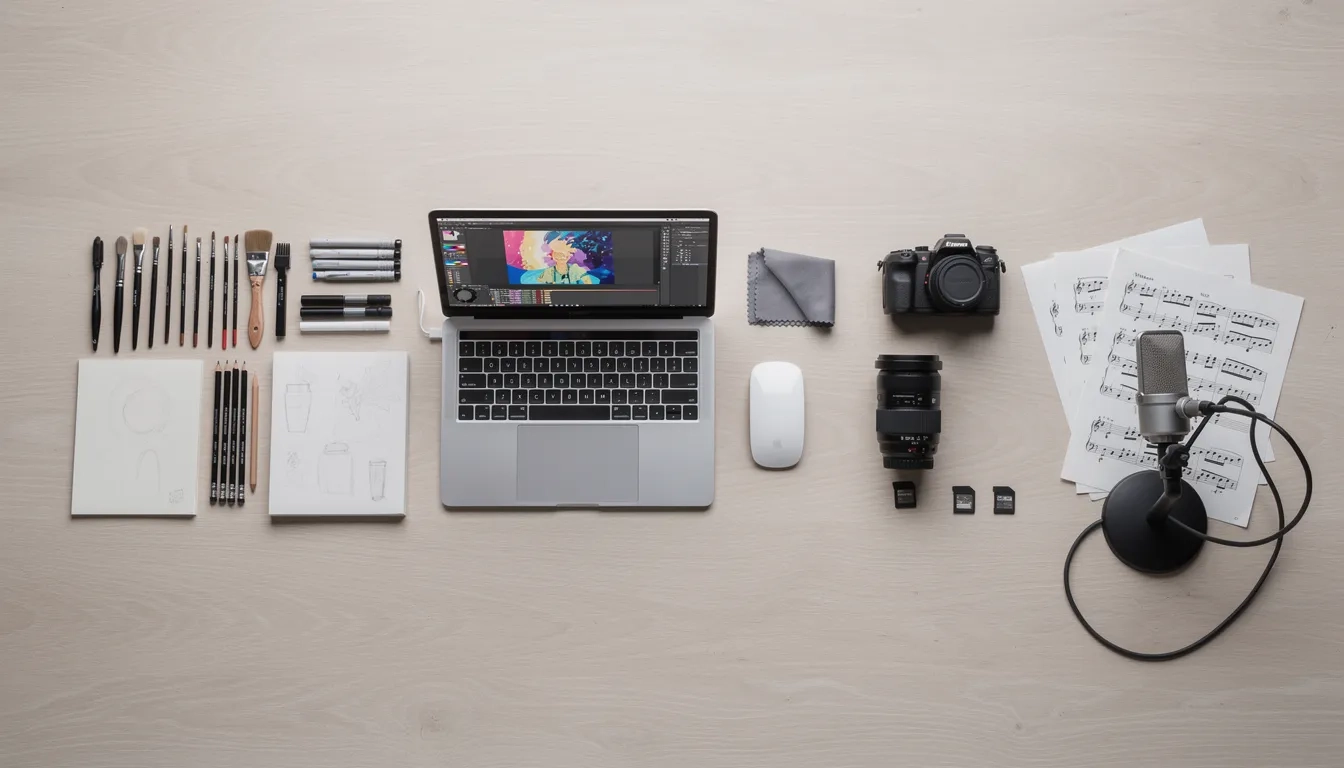
The "starving artist" framing has done a lot of damage. When 87% of arts and design alumni ages 18 to 64 are employed—according to the Strategic National Arts Alumni Project's 2022 survey of over 93,000 graduates—and the median annual wage for arts and design occupations sits at $51,660 (above the overall U.S. median of $48,060), the financial doom narrative looks shakier than the headlines suggest.
That doesn't mean every path is equally lucrative or stable. Fine arts and graphic design diverge from UX design and creative direction in both salary floors and career ceilings. And graduates today face a market reshaped by AI tools, remote work, and the erosion of traditional gatekeeping in almost every creative field.
So what does a smart path actually look like? Let's get specific.
The Spectrum: Creative Careers Are Wider Than Your Major Suggests
Most students assume their degree defines their path. It doesn't, really. Only 56% of arts and design alumni self-identify as working in arts and design occupations—but 75% have arts or design-related job duties regardless of job title. The skills travel widely.
The main career clusters for creative arts graduates:
- Design and visual communication (graphic design, UX/UI, motion graphics, brand identity)
- Fine and performing arts (illustration, painting, sculpture, theater, dance, music)
- Media and entertainment (film production, animation, game design, broadcasting)
- Education (K–12 arts teachers, higher education faculty, private instruction)
- Hybrid tech-creative roles (creative technologist, AR/VR artist, data visualization designer, AI-assisted artist)
- Arts business and administration (gallery management, arts nonprofits, publishing, art therapy)
The last two categories deserve special attention. They're growing, they pay well, and most arts programs aren't explicitly preparing students for them.
Traditional Paths: What They Actually Pay
Let's put the salary question to bed with actual numbers. The U.S. Bureau of Labor Statistics 2024 data gives us a clear picture:
| Career | Median Annual Salary | Projected Growth (2024–2034) |
|---|---|---|
| Graphic Designer | $61,300 | ~2% |
| Art Director | $105,180 | ~9% |
| Illustrator / Multimedia Artist | $59,300 | ~5.2% |
| Creative Director | $101,000–$150,000+ | Not separately tracked |
| Postsecondary Art Teacher | $79,640 | ~4% |
| Industrial Designer | $77,030 | ~2% |
The spread matters. A graphic designer and an art director can both hold art degrees and work at the same agency—but the salary gap between them can exceed $44,000 per year. What separates them isn't talent alone. It's usually specialization, business acumen, and the ability to manage briefs and client relationships.
Fine arts paths (illustration, painting, sculpture) tend to produce the most self-employment. 41% of arts alumni across all fields are self-employed, far higher than the national self-employment rate of roughly 6.5%. For fine arts specifically, that number skews even higher.
The tradeoff with self-employment is real. Freelance income is variable, health insurance is expensive, and administrative work (contracts, invoicing, taxes, client management) eats hours that new graduates rarely anticipate. But the independence is genuine—60% of self-employed arts alumni report being "very satisfied" with their level of independence at work.
The Hybrid Frontier: Where the Best Opportunities Are Right Now
Here's where I think the field is heading. The role of "creative technologist" barely existed as a job title a decade ago. Today it's one of the more interesting positions on a creative team—someone who bridges product design, interactive installations, and tech prototyping. Companies building AR/VR experiences, interactive marketing campaigns, or data-driven editorial content need people who can think visually and technically at the same time.
Growing hybrid roles worth building toward:
- UX/UI Designer — The clearest art-to-tech pipeline. Median salary at the mid-level exceeds $85,000. Learning basic HTML/CSS and user research methods can transform a graphic design background into a UX career with far stronger compensation.
- Motion Graphics Designer — Film, broadcast, social media, and game cinematics all need motion designers. Adobe After Effects proficiency often matters more than the specific degree on your résumé.
- AR/VR Artist — Still early, but companies building spatial computing experiences (in gaming, training, and retail) need artists who can work in Unity or Unreal Engine.
- Data Visualization Designer — Newsrooms, consulting firms, and tech companies pay well for people who can turn dense datasets into something humans actually understand.
- AI-Assisted Artist — Not a standard job title yet, but the underlying skill set—knowing how to direct, edit, and quality-control AI image generation tools toward a specific visual outcome—is already showing up in agency job postings.
The writing was on the wall by 2024: over 40% of creative industry leaders planned to increase investment in AI tools. Artists who treat AI as a skill to acquire rather than a threat to fear are positioning themselves well. That said, raw AI output without experienced artistic direction is usually generic. The tool still needs the eye.
The Self-Employment Reality: Portfolio Careers Are Normal Here
Creative arts is one of the few fields where multiple clients, multiple income streams, and non-linear career paths aren't signs of instability. Among self-employed arts alumni, 54% work with multiple employers or clients at any given time. That's a portfolio career (the kind where your income comes from five sources rather than one), and it demands a different skill set than a standard job search.
What portfolio careers actually require:
- A strong body of work that's been made public and is easy to share—not just sitting in a hard drive folder
- Basic client communication and contract skills; scope creep is the silent killer of freelance profitability
- A clear sense of how to price work, since many new graduates underprice by 30–40% in their first year
- A simple system for tracking income and setting aside taxes, since quarterly estimated tax payments catch a lot of first-time freelancers off guard
Only 33% of arts graduates reported acquiring business or entrepreneurial skills during their education—despite 65% needing them in their careers. That's the gap nobody warns you about.
This is the SNAAP finding that sticks with me most. It's a structural problem, not a personal failing. Some programs are working to fix it: California College of the Arts, for example, now embeds professional practice coursework across multiple MFA years rather than offering a single "careers" elective. That's the right instinct.
The Education Route: Underrated and Steadily Employed
Teaching creative arts doesn't get enough attention in career conversations. Secondary school art teachers (K–12) earn a median of around $62,000 per year with strong benefits, summer scheduling flexibility, and job protections that creative industry roles rarely offer. For graduates who love both making work and explaining it, it's a genuinely sustainable path.
Higher education is more competitive. Adjunct positions are plentiful but often pay poorly. Tenure-track faculty roles in fine arts and design are scarce and typically require an MFA, which functions as the terminal degree in most studio disciplines.
Art therapy is a growing adjacent field worth putting on your radar. It requires additional licensure beyond a fine arts degree but combines creative practice with mental health work. Employment in counseling fields is projected to grow at roughly 18% through 2033—well above any projection in the pure arts and design sector.
How to Build Your Path: A Framework for Students
The biggest mistake creative arts students make isn't choosing the "wrong" major. It's graduating without a clear picture of which specific role they're targeting and what hiring in that role actually looks for.
A simple decision framework:
Step 1: Pick a direction, not a destination. Are you drawn to client-facing commercial work (design, branding, advertising), independent practice (fine art, illustration, music), education, or technology-adjacent roles? Each has different income structures and required skills.
Step 2: Map your skill gaps early. If you want UX, you need user research methods and prototyping tools. If you want creative direction, you need to understand how to manage a brief and present to clients. Identify what your program won't teach you, then fill it in.
Step 3: Build public work starting in year one. A portfolio isn't something you assemble at graduation. Students who start posting work online in freshman year compound a searchability and credibility advantage over four years that's nearly impossible to replicate in the final semester.
Step 4: Learn one business skill per year. Pricing, contracts, client communication, tax basics—pick one and get competent. By graduation you'll have a foundation most of your peers won't.
Step 5: Find the hybrid layer in your field. Almost every creative specialty now has a technology layer. An illustrator who can animate in After Effects is more hireable than one who can't. A graphic designer who understands basic front-end development can take on projects that pure designers can't touch.
Bottom Line
- The employment picture is better than the stereotype. 87% of arts alumni are employed, and median arts and design wages slightly exceed the national median—but outcomes vary a lot by specialization.
- Hybrid roles are where the growth is. UX design, motion graphics, creative technology, and AR/VR art offer better salary trajectories than traditional graphic design or fine arts alone.
- Freelance is normal in this field, but you have to prepare for it. 41% of arts graduates are self-employed. The ones who struggle most are those who never learned basic business fundamentals. Bridge that gap before you graduate.
- Start building public work immediately. A portfolio built over four years beats one built in four months, every time.
- Stay directionally committed but technically flexible. The field changes faster than any curriculum can track. Willingness to pick up adjacent technical skills is the closest thing to job security creative arts graduates will find.
Frequently Asked Questions
Is an art degree worth it financially?
For most specializations, yes—but "worth it" depends on your specific path. The BLS reports a median annual wage of $51,660 for arts and design occupations, slightly above the overall U.S. median. Roles like art direction and UX design can reach $85,000 to $105,000+ with experience. The financial risk increases most sharply when graduates pursue fine arts without developing any freelance business skills, since self-employment income is variable and unpredictable in early years.
What creative arts careers are growing fastest right now?
Art direction is projected to grow 9% through 2033, faster than the national average. UX/UI design and motion graphics are also expanding, driven by demand for digital content across platforms. Art therapy, while requiring additional licensure, sits inside a counseling sector growing at roughly 18% per year. Traditional print graphic design is largely flat, with growth shifting to digital, web, and interactive formats.
Myth vs. reality: Do most art graduates end up working outside their field?
This is a common misconception. While only 56% of arts alumni self-identify as working specifically in arts or design occupations, 75% have arts or design-related duties regardless of job title. Many work in adjacent roles—marketing, UX, content production, education—where their creative training is directly applied. The "working at a coffee shop" narrative doesn't match what the SNAAP data actually shows.
How do AI tools affect career prospects for creative arts students?
AI is automating some repetitive tasks—stock image generation, basic layout work, simple logo drafts. But experienced practitioners who can direct, edit, and quality-control AI output are in higher demand, not lower. Students who learn to use tools like Adobe Firefly and Midjourney as part of their workflow will have a concrete advantage. The risk isn't AI itself; it's staying narrowly focused on skills that AI can already replicate without developing the judgment that AI can't.
What's the biggest gap in arts education that students should fill themselves?
Business and financial skills, without question. The Strategic National Arts Alumni Project found that 65% of arts graduates needed business or entrepreneurial skills in their careers—but only 33% acquired them during school. This covers pricing work, writing contracts, managing client scope, and understanding taxes as a self-employed person. Even one business course or a mentor who freelances successfully can make a real difference before graduation.
Can you realistically make a living as a fine artist or illustrator?
Yes, but usually not from a single source. Most working fine artists and illustrators combine creative work with teaching, licensing, commissions, or commercial illustration to build stable income. Pure gallery-based income is viable for a small percentage of practitioners. Illustrators who develop a clear specialization—children's books, editorial, surface pattern design, character work for games—typically find more reliable client pipelines than generalists do.
Sources
- Arts and Design Occupations: Occupational Outlook Handbook — U.S. Bureau of Labor Statistics
- Arts and Design Alumni Employment and Perspectives — Strategic National Arts Alumni Project (SNAAP)
- Graphic Design Careers: Salary, Education, and Job Paths (2025 Guide) — North Hennepin Community College
- Art Tech Industry Jobs Guide 2025 — Career Plan B
- 2026 Careers in Art: Degree Requirements, Statistics, Careers and Costs — Research.com
- 2026 AI, Automation, and the Future of Media Arts Degree Careers — Research.com